
Sarajevo to Dubrovnik: The Ultimate Balkan Road Trip
There are few drives in Europe as breathtaking or as deeply meaningful as the road from Sarajevo to Dubrovnik. It is a journey that winds through mountains, river valleys, Ottoman towns, and along the edge of the Adriatic. For couples, it is one of the most romantic and soulful road trips you can take, offering a rare mix of culture, scenery, and authenticity that makes every stop worth lingering for.
This is not just a drive between two cities. It is a passage through centuries. Bosnia and Herzegovina’s Ottoman heart slowly gives way to Croatia’s Mediterranean charm, and the landscapes shift from pine covered peaks to sun soaked coastline. Along the way, you will find hidden gems that deserve more attention than they get. These are the some top places to stop on a road trip from Sarajevo to Dubrovnik, drawn from my own travels and the small moments that stuck with me.
Sarajevo, Where East Meets West
Start in Sarajevo, a city that still feels like nowhere else on earth. Set in a valley surrounded by mountains, its minarets and church spires rise together against the skyline, a symbol of coexistence that has defined the city for centuries. Begin in Baščaršija, the Ottoman era old town, where cobbled lanes twist past the Gazi Husrev beg Mosque, the old clock tower, and the Sebilj Fountain. Grab a plate of ćevapi with kaymak before heading to Morica Han, a 16th century caravanserai turned café. Sitting there with a cup of Bosnian coffee, you can almost feel the centuries of travellers who once rested beneath its wooden beams.

For couples, Sarajevo offers both intimacy and adventure. Take the short hike to the Goat’s Bridge (Kozija Ćuprija) for sweeping views of the valley, or ride the Trebević cable car up to the mountain, where remnants of the 1984 Winter Olympic bobsled track still snake through the forest.

Konjic, Quiet Bridges and Cold War Secrets
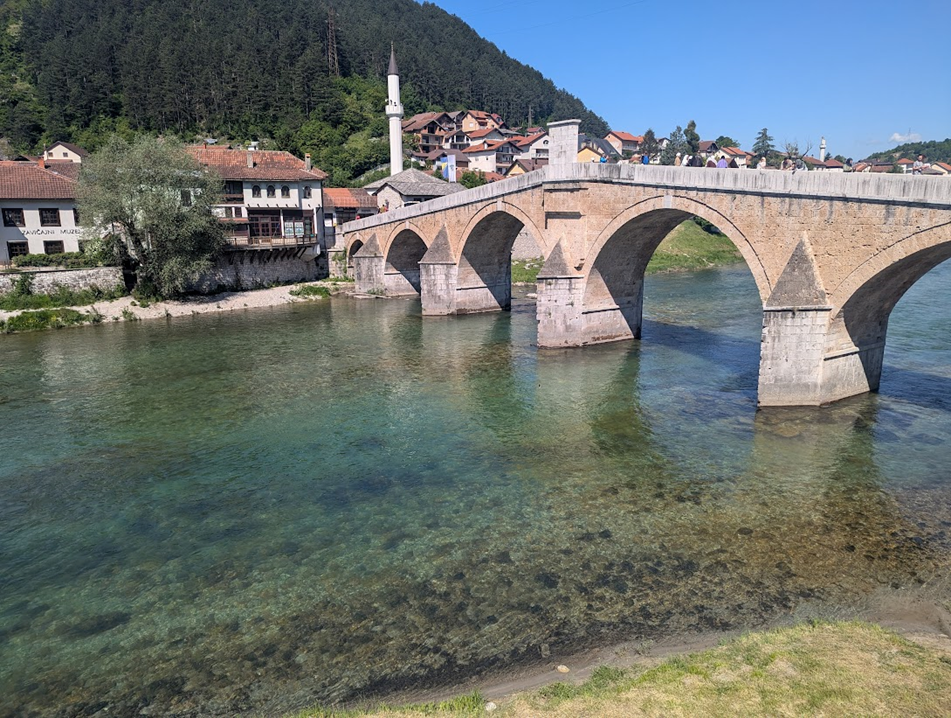
An hour or so southwest of Sarajevo lies Konjic, a small town that often slips under the radar but is full of surprises. Its Ottoman bridge, Stara Ćuprija, stretches across the Neretva in a picture perfect curve. Stop for a coffee by the water and wander through the old town where craftsmen still make wooden ware in the old tradition. For the adventurous, there is rafting on the Neretva or a visit to Tito’s Bunker, a vast Cold War complex carved into the mountain that feels like stepping into another era.

Baracko Lake, Tucked Between the Prenj Range
The Baracko Lake is a glacial lake located about thirty minutes from Konjic, hidden between the dramatic peaks of the Prenj mountain range. The water is still and icy clear, reflecting the deep greens and greys of the surrounding slopes. It is one of those rare places that feel untouched. The drive there is worth it for the mountain views alone, but the real reward is the quiet. You can pack a picnic, and have a quick dip if you are brave, with some of the best mountain reflections at golden hour. Be sure to bring a light jacket, and spend an hour by the shore watching the light shift across the ridges. For couples who love nature, the Baracko Lake is the perfect mix of romance and solitude.

Mostar, The Heart of Ottoman Romance
From Konjic the road follows the river through dramatic canyons and brings you to Mostar, one of Europe’s most romantic cities. The first glimpse of Stari Most is unforgettable. The old bridge, rebuilt after the war, arches over the emerald Neretva in a way that seems made for lovers and photographers alike.

Spend time wandering the Old Bazaar where copperware and textiles glint beneath stone arches. Climb the Koski Mehmed Pasha Mosque minaret for a 360 degree view of the town and the bridge below. We loved Kajtaz House, a 17th century Ottoman residence still in the care of the same family. Sedina, our host, shared stories that made the house breathe. For a riverside stay, Villa Amaleo was exactly what we needed. Waking to the sound of flowing water felt like a small luxury.
Blagaj, The Source of the Buna
A short drive from Mostar is Blagaj, centred around the Buna spring cave and the Tekke, a Dervish monastery planted into a cliff face. The water pours from the rock with an almost sacred hush. Sit at a riverside table and order grilled trout, or take a small boat toward the cave mouth where the river emerges. The place is quiet and spiritual, an ideal counterpoint to the busy heart of Mostar.

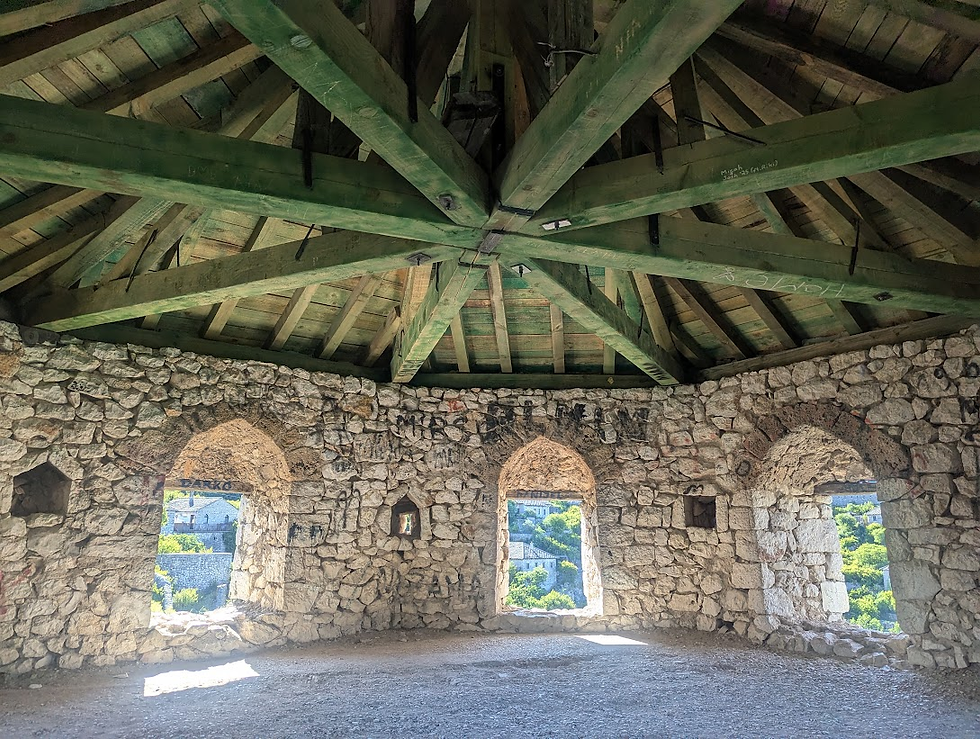
To get away from the crowds of tourists and local visitors, you can hike up to the Blagaj Fortress, known locally as Stjepan Grad. The trail begins just outside the village, about an 8 minute drive away from the Tekke and winds its way steadily uphill, offering breathtaking views of the Buna valley as you climb. The path is rocky but manageable, and the reward at the top is worth every step. Standing among the crumbling walls of the fortress, with the entire valley spread out below, you can see how strategically important this spot once was. The fortress dates back to the Middle Ages and was later used by the Ottomans. From up there, the Tekija looks like a tiny white speck tucked against the mountain, and you can trace the winding course of the river disappearing into the horizon. It’s one of those views that captures both the history and the natural beauty of Herzegovina in a single frame.
Počitelj, A Fortress Frozen in Time
Further along the Neretva River lies Počitelj, one of the most atmospheric places you can visit on the drive between Mostar and Dubrovnik. Built on a steep hillside above the river, this walled Ottoman-era village looks like it has barely changed in centuries. Its narrow cobbled paths wind past stone houses with slate roofs, shaded fig trees, and the scent of jasmine drifting in the air. The town’s centrepiece is the Šišman Ibrahim-Pasha Mosque, built in the 16th century and beautifully restored. Its elegant stone minaret rises above the rooftops and stands as a reminder of Počitelj’s importance during the height of Ottoman rule. Just nearby is the Gavrankapetan Tower, the remains of a fortress that once guarded this strategic stretch of the Neretva valley.

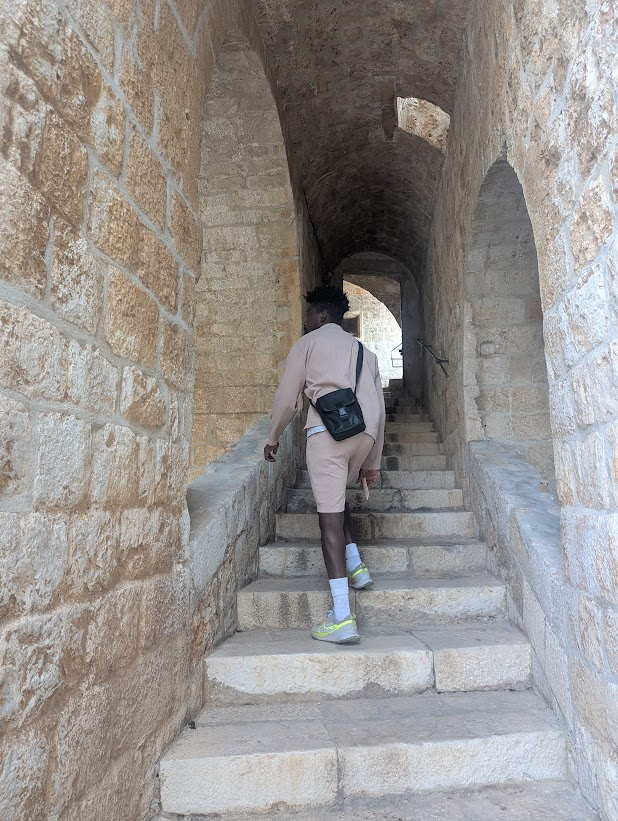
We also the Počitelj Fortress, and it turned out to be one of the most rewarding experiences of the entire trip. The fortress walls stand weathered but proud. From here, you can see the Neretva snaking through the valley, the green hills glowing under the afternoon light, and the clustered stone roofs of Počitelj below. The Počitelj Fortress dates back to the 14th century, originally built by Bosnian King Tvrtko I around 1383 to guard the Neretva Valley and the trade routes connecting the Adriatic coast with inland Bosnia. For over four centuries, Počitelj flourished as a fortified town under Ottoman rule until the Austro-Hungarian occupation in 1878, when it gradually lost its strategic importance.
Kravica Waterfall, A Natural Curtain
Before the road turns toward the coast, make time for Kravica Waterfall. The cascade falls in a wide, horseshoe shape into natural pools that invite cooling swims. It is a place people come to relax, picnic, and float beneath the falls. On a hot afternoon there is nothing better than slipping into the clear water and feeling the spray on your face. Bring swimwear and a towel and plan for a leisurely hour or two here. It is advised to get there in the morning before 10:30 to avoid the rush of visitors and an tourists.

Dubrovnik, Salt Air and Stone Walls
Finally the road opens onto Dubrovnik, where the mountains meet the sea and the old walls rise above the Adriatic. Walk the ramparts at sunset, get lost in marble paved streets, and share a meal on a terrace with the waves just below. Dubrovnik is an unforgettable finale to a journey that moves from Ottoman courtyards to Venetian squares and from mountain springs to open salt sea.



Comments